A surprising number of DeFi losses do not begin with a spectacular protocol failure. They begin with a user approving an action whose economic meaning was misunderstood. The transaction may be valid, the contract may be genuine, and the wallet may sign exactly what it was asked to sign—yet the result can still be dangerous. Multi-chain activity magnifies this problem because the same address, asset symbol, and familiar interface can conceal different networks, permissions, liquidity conditions, and contract behaviors.
For a US-based DeFi user moving between Ethereum and other EVM-compatible chains, risk assessment therefore cannot stop at asking whether a protocol is popular. The more useful question is: what will this transaction allow, transfer, or change, and how confidently can that outcome be verified before signing? A wallet with transaction simulation and security warnings can improve that verification process, but it cannot convert uncertain protocols into safe ones. Its value lies in reducing avoidable ambiguity.
A concrete case: the same strategy, three different risk surfaces
Consider a user who wants to supply a stablecoin, borrow against it, and later move the position to another EVM chain for a lower transaction cost. On the surface, this looks like one strategy. Operationally, it is several distinct risk events: selecting the correct network, identifying the intended token contract, granting an allowance, supplying funds, borrowing an asset, bridging value, and interacting with a destination protocol.
Each step changes the risk profile. The lending market may face liquidation or oracle risk. The bridge may introduce custody, message-validation, or validator-set risk. The destination chain may have thinner liquidity, fewer independent infrastructure providers, or a less mature monitoring ecosystem. Even the token labeled with a familiar ticker may be represented by a different contract address and have different redemption or liquidity assumptions.
This is the first important distinction: multi-chain risk is not merely the sum of protocol risks. It is also a coordination risk. The user must maintain a correct mental model across networks whose interfaces look similar but whose security assumptions are not identical. A transaction that is reasonable on one chain may be economically irrational on another because gas, slippage, collateral depth, or oracle behavior differs.
What a wallet can reveal—and what it cannot
Transaction simulation is useful because it translates a proposed state change into a more interpretable preview. Depending on the transaction and the wallet’s available data, a user may see which assets are expected to leave the account, which assets should arrive, whether an approval grants broad spending authority, and whether the call appears to interact with a known contract. This is materially better than treating a hexadecimal payload as a matter of trust.
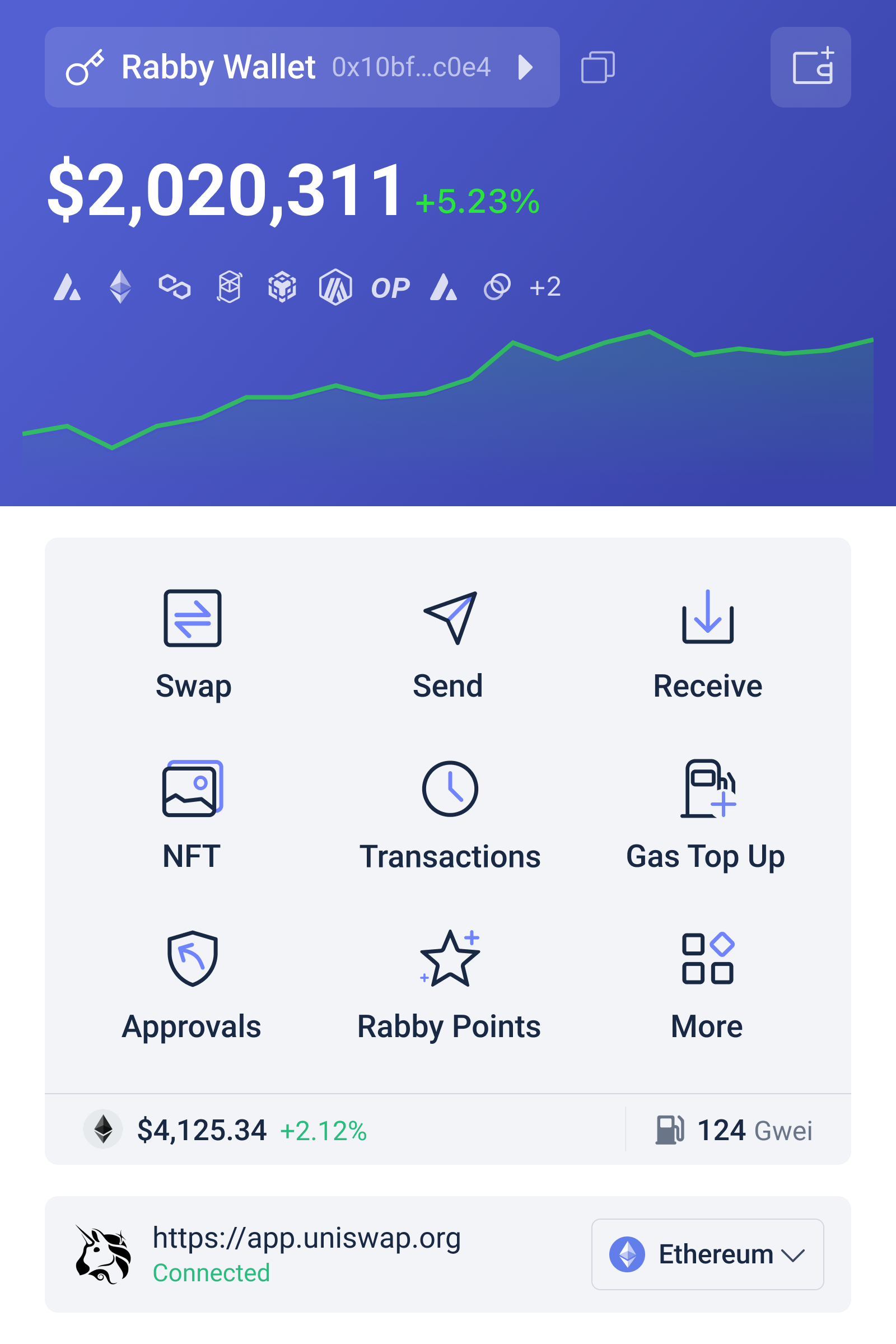
Security features can also identify suspicious approvals, unfamiliar contracts, deceptive token behavior, or a mismatch between the connected application and the requested action. For advanced users, a wallet such as rabby wallet can serve as a transaction review layer across Ethereum and EVM networks, particularly when the user is comparing the expected outcome with the simulated outcome before signing.
But simulation has a boundary that deserves emphasis. It is a forecast under assumptions, not a guarantee. A simulation may not capture a later change in market price, a transaction-ordering attack, a compromised front end, a faulty oracle update, or a protocol state that changes before the transaction is mined. Some contract behavior is deliberately complex or dependent on external calls. A clean preview means that the proposed call appears consistent with the available state; it does not certify the solvency, governance, or future behavior of the protocol.
That limitation changes how the feature should be used. The right question is not “Did the wallet approve this transaction?” It is “Does the wallet’s expected outcome match my independent understanding of the strategy?” If the answer is no, the transaction should pause. If the result is unclear, uncertainty itself is a risk signal.
Three ways to manage multi-chain exposure
One wallet, many chains
Using a single advanced wallet across EVM chains is operationally convenient. It keeps assets and addresses visible in one place, reduces the temptation to install numerous unfamiliar extensions, and can provide consistent transaction previews and warnings. For users who actively rebalance or interact with several protocols, that consistency has real value.
The trade-off is concentration. A compromised seed phrase, malicious browser extension, or careless signing habit can affect assets across multiple networks. A unified interface may also create false familiarity: the same buttons and address format can make distinct chains feel interchangeable. Convenience reduces friction, but reduced friction can also reduce deliberate checking.
Separate wallets for separate risk categories
A second approach is compartmentalization. A user might keep long-term holdings in a hardware wallet, use a separate hot wallet for routine DeFi activity, and maintain a small experimental wallet for new protocols or bridges. This does not eliminate smart-contract risk, but it limits the amount exposed to a single operational mistake.
Compartmentalization sacrifices convenience and introduces its own failure modes. Funds may be sent from the wrong account, a recovery phrase may be handled poorly, or the user may become less attentive because the wallet is perceived as “safe.” Hardware protection is strongest against key extraction; it does not independently validate a protocol’s economic logic or prevent a user from approving an excessive allowance.
Custodial or managed access
Some users prefer an exchange, custodian, or managed account for part of their exposure. This can reduce the burden of seed-phrase management and provide familiar account-recovery processes. It may be appropriate for funds that are not being used actively in DeFi.
The cost is a shift in risk rather than its disappearance. The user accepts counterparty, withdrawal, account-freeze, regulatory, and platform-operational risks. In the United States, tax reporting and transaction records may also become easier in some custodial settings, but that administrative convenience should not be confused with investment safety.
A practical framework for assessing a DeFi transaction
A reusable assessment can be organized around four questions. First, identity: am I on the intended chain, using the intended application, token, and contract address? Second, authority: what permission am I granting, for how much, and for how long? Third, outcome: what assets should leave, what should arrive, and what position will exist afterward? Fourth, dependency: which assumptions must remain true for the transaction to be economically sound?
The fourth question is often neglected. A leveraged lending position depends on collateral prices, oracle design, liquidity, liquidation incentives, and the ability to repay or exit. A bridge transfer depends on message delivery and the bridge’s security architecture. A yield strategy may depend on emissions, market demand, or a token whose value is not stable merely because its name suggests stability.
Users should also distinguish allowance risk from transaction risk. An allowance can authorize a contract to spend tokens later, potentially beyond the amount involved in the current swap. Revoking unused approvals can reduce exposure, but revocation itself costs gas and does not undo a transfer already made. Where supported, limited approvals are generally easier to reason about than unlimited permissions, although the precise safety benefit depends on the contract and user workflow.
Simulation is most powerful when paired with this framework. If the preview shows an unexpected recipient, token, approval amount, or balance change, stop. If the result appears correct but the protocol depends on an unfamiliar oracle or thin liquidity, the wallet has answered only the transaction question—not the protocol question.
What to watch as multi-chain DeFi develops
The recent emphasis on wallets serving Ethereum and EVM networks reflects a broader structural reality: users increasingly need one security workflow across many environments. If wallet interfaces become better at displaying chain identity, permissions, simulated outcomes, and protocol dependencies, the practical standard for signing may improve. That is a plausible direction, not a guarantee.
The unresolved issue is whether better interface warnings will keep pace with increasingly composable contracts. A transaction may appear simple while triggering several internal calls, interacting with a router, using a price feed, and creating a position whose risk cannot be represented by a single balance change. The next useful generation of wallet security will likely need to explain not only what a transaction does immediately, but also which rights and dependencies it creates.
For now, the defensible approach is narrower: use simulation as a verification tool, maintain separate risk budgets for trusted and experimental activity, and treat every chain change as a fresh context rather than a cosmetic setting. A wallet can help a careful user see more. It cannot replace judgment, protocol research, or limits on exposure.
Frequently asked questions
Does transaction simulation make DeFi transactions safe?
No. Simulation can reveal the expected effects of a proposed transaction and expose obvious mismatches, but it depends on available blockchain state and cannot guarantee future execution, protocol solvency, oracle accuracy, or protection from every form of attack.
Is using one wallet across multiple EVM chains a bad idea?
Not necessarily. A consistent wallet can reduce interface confusion and make transaction review easier. The main trade-off is concentration: a compromised key or repeated signing mistake may affect assets on several chains. Many users therefore combine a primary wallet with hardware-secured and limited-balance accounts.
What is the most important check before signing a DeFi transaction?
Confirm that the simulated outcome matches the intended action: the correct chain, contract, token, recipient, approval amount, and resulting position. Then assess the protocol assumptions that a wallet preview cannot establish, including liquidity, oracle dependence, bridge security, and liquidation conditions.